


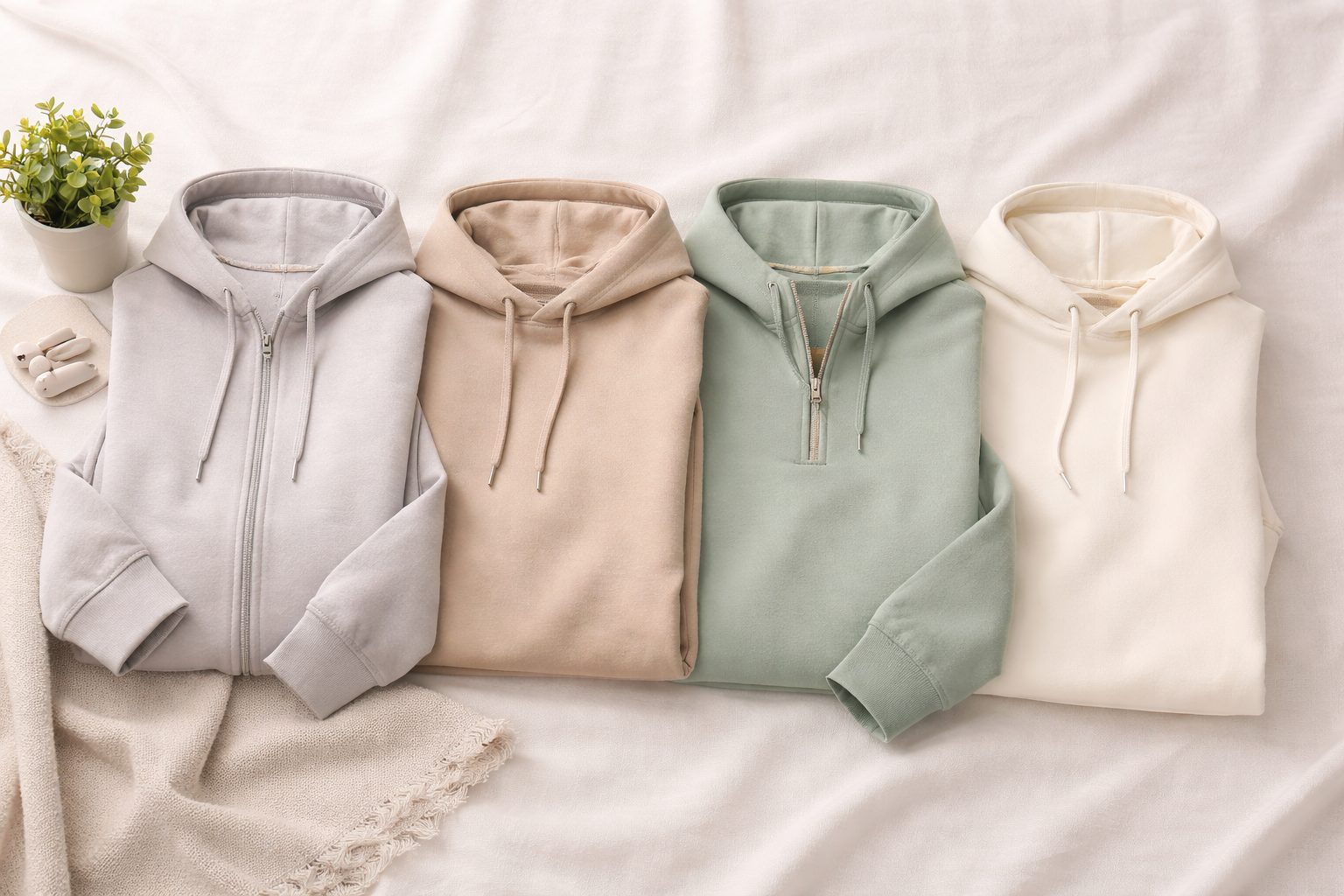
The type of hoodie you choose affects everything from how warm you’ll be to how versatile it is for different occasions. A heavyweight pullover perfect for winter camping won’t serve you well at the gym, just as a cropped fashion hoodie won’t keep you warm on cold days.
Understanding the different types helps you make smarter purchasing decisions and build a more functional wardrobe. Instead of buying multiple similar hoodies, you can strategically select different types that serve distinct purposes in your life. Here’s a breakdown of the most common hoodie styles, their key features, and when to wear them.
Pullover Hoodies
What they are: Classic hoodies you pull over your head with no zipper.
Pullover hoodies are the original hoodie design and remain the most popular style. The continuous fabric across the front provides better insulation than zip-up versions, making them naturally warmer. They’re recognized by their iconic kangaroo pocket that keeps both hands warm simultaneously.
Key features:
- Single kangaroo pocket across the front that’s spacious enough for phones, keys, and keeping hands warm
- Warmer than zip-ups because there’s no front opening where cold air can penetrate
- Great surface for graphics and logos since the front panel is uninterrupted
- Simple, timeless design that never goes out of style
- Drawstrings allow you to adjust the hood for wind protection
Best for: Cold weather, lounging at home, casual everyday wear, showcasing graphic designs
Pros: Maximum warmth retention, classic aesthetic that works with any outfit, more durable since there’s no zipper to break, often less expensive than zip-ups
Cons: Can’t adjust ventilation without removing the entire hoodie, requires pulling over your head which can disturb hair or be awkward with glasses, less versatile for layering
Zip-Up Hoodies
What they are: Hoodies with a full-length zipper down the front.
Zip-up hoodies offer unmatched versatility by functioning as both a hoodie and a lightweight jacket. You can wear them fully zipped for warmth, partially unzipped for ventilation, or completely open over a t-shirt. This adaptability makes them ideal for fluctuating temperatures throughout the day.
Key features:
- Opens completely like a jacket, giving you full control over temperature
- Two separate side pockets positioned at natural hand resting spots
- Easy temperature control by adjusting how much you zip up or down
- Can be worn open as a casual jacket layer over other shirts
- Often includes a chin guard to prevent the zipper from irritating your neck
Best for: Layering over other clothes, workouts where you heat up and cool down, travel when temperatures vary, transitional weather
Pros: Easy to put on and take off without messing up your hair, adjustable warmth throughout the day, versatile styling options (wear open or closed), works perfectly as a light jacket, great for activities with changing body temperature
Cons: Slightly less warm than pullovers due to the zipper creating a potential cold spot, zippers can break or malfunction over time, typically more expensive than comparable pullovers
Oversized Hoodies
What they are: Intentionally loose-fitting hoodies with extra room throughout.
Oversized hoodies have become a streetwear staple and comfort favorite. They’re designed to be larger than your normal size, with dropped shoulders that sit lower than your natural shoulder line and sleeves that extend past your wrists. The relaxed fit creates both a fashionable silhouette and maximum comfort.
Key features:
- Dropped shoulders and extended sleeves that create a relaxed, contemporary look
- Longer body length that often extends to mid-thigh or lower
- Relaxed, baggy silhouette that drapes loosely rather than hugging your body
- Popular in streetwear culture and among fashion-forward dressers
- Often features bold graphics or logos that complement the oversized aesthetic
Best for: Street style outfits, maximum lounging comfort, making fashion statements, creating a laid-back aesthetic, people who prefer roomy clothing
Pros: Extremely comfortable with plenty of room to move, trendy and fashion-forward appearance, works for all body types and provides a flattering drape, great for layering other pieces underneath, makes you feel cozy and relaxed
Cons: Can overwhelm smaller frames and make you look shapeless, less practical for active movement or exercise, may be too bulky to layer under jackets, sizing can be confusing since “oversized” varies by brand
Cropped Hoodies
What they are: Hoodies that end above the waist, typically at the natural waistline.
Cropped hoodies bring a modern, fashion-forward twist to the classic hoodie design. They’re particularly popular in women’s athleisure and streetwear, offering a way to wear a hoodie while maintaining a more fitted, proportional silhouette. They work exceptionally well with high-waisted bottoms.
Key features:
- Shorter body length that typically hits at your natural waist or slightly above
- Often fitted or slightly oversized, but never as long as traditional hoodies
- Modern, fashion-forward style that feels current and trendy
- Exposes your midriff or the waistband of your pants, creating visual interest
- Can be pullover or zip-up style
Best for: Athleisure outfits, pairing with high-waisted leggings or jeans, casual fashion-focused looks, warmer weather when full coverage isn’t needed
Pros: Creates balanced proportions by not overwhelming your frame, doesn’t bunch up when sitting down, looks intentional and styled rather than just casual, pairs perfectly with high-waisted bottoms, trendy and modern aesthetic
Cons: Provides less coverage and warmth than full-length hoodies, may expose your midriff which some people aren’t comfortable with, more style-focused than functional, limited versatility compared to traditional lengths
Lightweight Hoodies
What they are: Thin-fabric hoodies designed for mild weather and versatile wear.
Lightweight hoodies use thinner materials that provide the comfort and style of a hoodie without heavy insulation. They’re perfect for those in-between temperatures when you need a light layer but don’t want to overheat. Many people keep a lightweight hoodie in their car or bag for unexpected temperature drops.
Key features:
- Made from thinner cotton, French terry, or performance blends that breathe well
- Breathable and less insulating, so you won’t overheat in moderate temperatures
- Often packable for travel, folding down small in luggage or bags
- Faster drying than heavyweight hoodies, which is convenient for washing
- Typically weigh 6 ounces or less
Best for: Spring and summer evenings, layering under jackets in fall and winter, travel when space is limited, indoor wear in air-conditioned spaces, mild climates year-round
Pros: Won’t overheat you in warmer weather, easy to pack and transport, versatile across multiple seasons, usually more affordable than heavyweight options, works well for light activity without causing excessive sweating
Cons: Not warm enough for cold weather as a standalone piece, may feel less substantial or quality compared to heavier hoodies, can wear out faster with frequent use
Heavyweight Hoodies
What they are: Thick, substantial hoodies built for serious warmth and long-lasting durability.
Heavyweight hoodies are the workhorses of the hoodie world. With dense fabric construction, they’re designed to withstand both cold temperatures and heavy use. These hoodies often feel more like a jacket than a sweatshirt and can serve as your primary outer layer in winter.
Key features:
- Dense fabric weighing 10-14+ ounces, making them noticeably heavier than standard hoodies
- Often fleece-lined on the interior for additional warmth and softness
- Reinforced construction at stress points like pockets and seams
- Holds its shape well over time instead of stretching out
- Thicker drawstrings and more substantial ribbed cuffs
Best for: Winter weather, outdoor activities like hiking or camping, cold climates, wearing as standalone outerwear instead of under a jacket, work environments that require durability
Pros: Provides maximum warmth without needing additional layers, highly durable and resistant to wear and tear, structured appearance that looks substantial and quality, retains shape after many washes, excellent value over time due to longevity
Cons: Too warm for mild weather or indoor use, harder to layer under jackets due to bulk, can feel stiff initially before breaking in, typically more expensive upfront, takes longer to dry after washing
Athletic/Performance Hoodies
What they are: Hoodies specifically engineered for workouts and active wear.
Performance hoodies prioritize function over fashion, using technical fabrics and athletic cuts designed to move with your body during exercise. They’re built to handle sweat, maintain comfort during activity, and dry quickly afterward. Many feature specialized details you won’t find on casual hoodies.
Key features:
- Moisture-wicking fabrics that pull sweat away from your skin to keep you dry
- Lightweight and breathable construction that won’t weigh you down during movement
- Athletic cut designed for full range of motion without restriction
- Often includes thumbholes to keep sleeves in place, ventilation panels for airflow, and reflective elements for visibility
- Typically made from polyester blends rather than cotton
Best for: Workouts and gym sessions, running outdoors, sports activities, active lifestyles, warming up and cooling down
Pros: Keeps you dry during physical activity instead of becoming soaked with sweat, allows unrestricted movement for exercises, dries quickly after washing or sweating, often includes practical features like zippered pockets for securing items, lightweight feel doesn’t hinder performance
Cons: The technical, sporty appearance looks less casual for everyday wear, can be more expensive than basic hoodies, synthetic fabrics may not feel as comfortable against skin during non-active wear, designs tend to be more functional than fashionable
Fashion/Designer Hoodies
What they are: Premium hoodies that emphasize style, brand prestige, and unique design elements.
Designer hoodies elevate the basic hoodie into a fashion statement piece. Created by established fashion brands or sought-after streetwear labels, these hoodies command higher prices through superior materials, unique designs, and brand cachet. They’re as much about making a style statement as they are about comfort.
Key features:
- Higher-quality materials like premium cotton, cashmere blends, or innovative fabrics
- Unique designs and cuts that distinguish them from mass-market hoodies
- Prominent or luxury branding that signals the designer or brand
- Fashion-forward details like asymmetric cuts, unusual colorways, or artistic graphics
- Limited releases or collaborations that create exclusivity
Best for: Making bold style statements, creating streetwear outfits, trend-conscious wear, collectors who value brand heritage, occasions where fashion matters
Pros: Standout designs that differentiate you from standard hoodies, superior quality in materials and construction, fashionable and on-trend aesthetics, often retain resale value or even appreciate, signal style awareness and investment in appearance
Cons: Very expensive compared to basic hoodies (often $150-$500+), designs may go out of style quickly, often require specific styling knowledge to wear appropriately, premium care requirements, brand hype may not always reflect proportional quality increase
Sleeveless Hoodies
What they are: Hoodies without sleeves, creating a vest-like athletic garment.
Sleeveless hoodies combine the hood and pocket of a traditional hoodie with the freedom of a tank top or vest. They’re popular in gym culture and casual athletic wear, offering coverage for your torso while keeping arms completely free. The style makes a bold, athletic statement.
Key features:
- Hood with no sleeves, leaving arms fully exposed
- Shows your arms completely while covering your torso
- Often worn in gym settings or for athletic activities
- Casual, athletic vibe with a sporty aesthetic
- Usually made from lightweight, breathable materials
Best for: Gym workouts where arm mobility is crucial, showcasing arm muscles, warm weather casual wear, athletic activities that require unrestricted arm movement
Pros: Complete freedom of arm movement for exercises like lifting or boxing, showcases your physique and arm definition, stays cooler than sleeved hoodies during activity, unique style that stands out from standard hoodies, hood provides some coverage when needed
Cons: Very limited versatility beyond athletic settings, provides minimal coverage or warmth, extremely casual appearance not suitable for most public settings, seasonal limitations to warmer weather, polarizing style that doesn’t appeal to everyone
Tech/Techwear Hoodies
What they are: Functional hoodies with utility features, technical fabrics, and modern aesthetics.
Techwear hoodies blend fashion with function, incorporating features inspired by outdoor gear, tactical clothing, and urban utility. They’re designed for people who value both style and practical features, offering solutions for carrying items, weather protection, and modern urban living.
Key features:
- Multiple pockets and compartments for organizing phones, keys, wallets, and other items
- Water-resistant or technical fabrics that repel rain and wind
- Modular design elements like removable pieces or adjustable features
- Urban or futuristic styling with clean lines and often monochromatic colors
- May include features like hidden pockets, cord management systems, or ventilation zippers
Best for: Urban commuting where you need to carry items, travel when organization matters, tech enthusiasts who appreciate functional design, function-focused wear over pure fashion
Pros: Highly functional with practical features for daily life, weather-resistant materials protect you and your belongings, unique style that stands out from conventional hoodies, excellent organization with multiple storage options, often uses durable, long-lasting materials
Cons: Can be quite expensive due to technical fabrics and features, may look too tactical or utility-focused for casual social settings, complex designs can be overwhelming for some wearers, learning curve to use all features effectively
Hoodie Dress/Long Hoodies
What they are: Extra-long hoodies that extend to mid-thigh or lower, functioning as dresses or tunics.
Hoodie dresses blur the line between a hoodie and a dress, offering the comfort of loungewear with the coverage of a dress. They’re particularly popular for casual, comfortable outfits that still look intentional and put-together. Many people wear them as standalone pieces with leggings or tights.
Key features:
- Extended length reaching mid-thigh, knee-length, or even longer
- Often oversized fit that drapes loosely over the body
- Can be worn as a standalone piece without needing pants (though often paired with leggings)
- Popular in women’s fashion and loungewear
- Usually made from soft, comfortable materials like cotton or fleece
Best for: Casual dressing when you want comfort with coverage, loungewear for relaxing at home, pairing with leggings or tights for easy outfits, cooler weather when you want warmth without layering
Pros: Comfortable and modest with more coverage than standard hoodies, creates an easy, complete outfit solution, cozy and warm for cold days, versatile enough to dress up slightly with the right accessories, forgiving fit works for various body types
Cons: Can be too long for shorter people, making them look overwhelmed, limited styling options compared to regular hoodies, may look too casual for many public settings, length can be impractical for certain activities
Which Type Should You Choose?
- For everyday casual wear: Pullover or zip-up hoodies in medium weight
- For working out: Athletic/performance hoodies or lightweight styles
- For cold weather: Heavyweight pullover hoodies
- For fashion and style: Oversized, cropped, or designer hoodies
- For maximum versatility: Zip-up hoodies in neutral colors
- For comfort at home: Oversized pullover hoodies
Quick Comparison Chart
| Type | Warmth | Versatility | Style Factor | Best Season |
|---|---|---|---|---|
| Pullover | High | Medium | Classic | Fall/Winter |
| Zip-Up | Medium | High | Casual | Year-round |
| Oversized | Medium-High | Medium | Trendy | Fall/Winter |
| Cropped | Low | Low | Fashion | Spring/Summer |
| Lightweight | Low | High | Casual | Spring/Summer |
| Heavyweight | Very High | Low | Classic | Winter |
| Athletic | Low-Medium | Medium | Sporty | Year-round |
| Designer | Varies | Low | High | Varies |
Final Thoughts
The best hoodie type depends on how you plan to use it. Most people benefit from owning 2-3 different types: a versatile zip-up for everyday wear, a cozy pullover for cold weather, and perhaps a lightweight option for warmer months.
Consider your climate, lifestyle, and personal style when choosing. Don’t be afraid to try different types hoodies are affordable enough that experimenting won’t break the bank, and finding your perfect style makes all the difference in comfort and satisfaction.
Frequently Asked Questions
What’s the most versatile type of hoodie? Zip-up hoodies in medium weight are the most versatile. They work across multiple seasons, can be worn open or closed, layer easily under jackets, and transition between different activities throughout the day. A neutral-colored zip-up hoodie fits into almost any casual wardrobe.
Should I size up for an oversized hoodie? Yes, most people size up 1-2 sizes for an intentionally oversized look. However, some brands design their hoodies to be oversized at true-to-size, so always check the brand’s size chart and product description. Look at the measurements for chest width and body length to determine how oversized it will actually be.
What’s the difference between a pullover and a zip-up hoodie? A pullover hoodie has no front opening and must be pulled over your head, while a zip-up has a full-length zipper allowing it to open completely. Pullovers are warmer and have a cleaner aesthetic, while zip-ups offer better temperature control and layering versatility.
Are heavyweight hoodies worth the extra cost? If you live in a cold climate or need a durable hoodie for outdoor work or activities, heavyweight hoodies are absolutely worth it. They last significantly longer than lightweight options, provide superior warmth, and maintain their shape over time. However, if you primarily need hoodies for mild weather or indoor wear, a medium-weight option offers better value.
Can I wear a cropped hoodie if I’m not thin? Absolutely. Cropped hoodies work for all body types when styled correctly. Pair them with high-waisted bottoms that meet the hoodie’s hem, creating a balanced silhouette without exposing your midriff. The key is finding the right length that hits at your natural waist rather than above it.
What type of hoodie is best for working out? Athletic or performance hoodies are specifically designed for workouts, with moisture-wicking fabrics, lightweight construction, and cuts that allow movement. However, lightweight regular hoodies also work well for exercise if you prefer a less technical look. Avoid heavyweight or 100% cotton hoodies for intense workouts as they’ll become heavy and uncomfortable when soaked with sweat.
How do I know if a hoodie is good quality? Check the fabric weight (heavier generally means better quality), examine the stitching for evenness and reinforcement at stress points, feel the fabric for softness and thickness, check if cuffs and waistband have good elasticity, and look at the zipper quality on zip-up styles. Quality hoodies typically weigh 8+ ounces and use double-stitching.
Are designer hoodies actually better quality? Not always. While many designer hoodies do use superior materials and construction, you’re also paying significantly for the brand name and design. Mid-range brands often offer comparable quality at a fraction of the price. Designer hoodies make sense if you value the specific design, brand prestige, or unique features, but quality alone doesn’t always justify the premium price.
What’s the best hoodie type for layering under a jacket? Slim-fit or regular-fit zip-up hoodies layer best under jackets. They create less bulk than pullovers, and being able to open the zipper prevents overheating. Lightweight or medium-weight options work better than heavyweight hoodies, which add too much bulk and restrict movement when layered.
Can hoodies be business casual? Generally, no. Hoodies remain casual garments in most professional settings. However, some modern, creative workplaces accept minimalist hoodies in neutral colors paired with tailored pants and clean sneakers as acceptable casual Friday attire. Always check your workplace dress code before wearing a hoodie to the office.
How many hoodies should I own? Most people benefit from owning 3-5 hoodies: one heavyweight for winter, one lightweight for summer, one versatile zip-up for year-round wear, and perhaps one or two in different styles or colors for variety. This provides coverage for different seasons and activities without excessive wardrobe redundancy.
What hoodie type lasts the longest? Heavyweight pullover hoodies typically last the longest because they use thicker, more durable fabrics and have no zipper to break. Quality construction with reinforced stitching at stress points also significantly extends lifespan. Proper care washing in cold water, air drying, and storing folded helps any hoodie type last longer.
